English to Medieval English Translator
Modern tools can instantly translate to medieval English, but understanding the logic behind them helps you get better and more realistic results.
English to Medieval English Translator: How It Works and What to Expect (2026)
Looking for an accurate english to medieval english translator? Whether you want to write like a knight, create fantasy content, or just have fun, this guide explains how medieval translation works and what results you can expect.
What Is an English to Medieval English Translator?
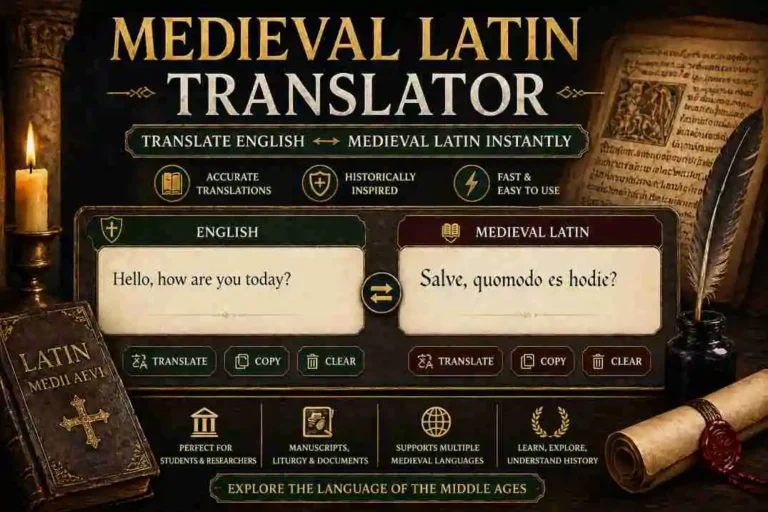
An english to medieval translator converts modern English into a historical or stylized version of medieval language.
These tools are also known as:
- medieval language translator
- medieval text translator
- medieval sentence translator
They transform words, grammar, and tone to mimic how people spoke in medieval times.
How to Translate English to Medieval English
To translate english to medieval english, tools use three main systems:
1. Word Conversion
Modern → Medieval:
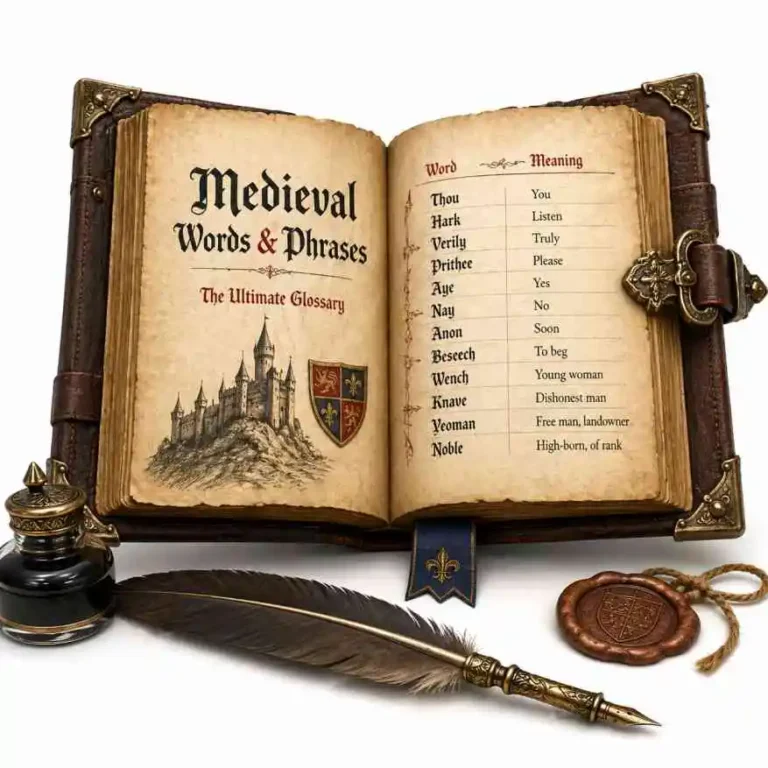
- You → Thou
- Your → Thy
- Friend → Companion
2. Grammar Transformation
- Has → Hath
- Does → Doth
- Will → Wilt
This gives structure to medieval talk translator outputs.
3. Tone and Style Engine
Advanced tools apply tone:
- Noble
- Peasant
- Formal
- Humorous
This is where features like medieval peasant translator or medieval accent translator come in.
English to Medieval vs Medieval to Modern Translation
| Feature | English → Medieval | Medieval → Modern |
|---|---|---|
| Purpose | Creative writing | Understanding text |
| Output | Stylized | Simplified |
| Accuracy | Approximate | More direct |
Medieval English to Modern English Translator
Many users also need reverse conversion:
medieval english to modern english translator
This helps:
- Decode old texts
- Understand phrases
- Learn medieval language faster
Types of Medieval Translators
1. Medieval Word Translator
Converts individual words.
2. Medieval Sentence Translator
Transforms full sentences with grammar.
3. Medieval Text Translator
Handles paragraphs and longer content.
4. Medieval Dialect Translator
Applies regional style variations.
5. Medieval Accent Translator
Focuses on tone and pronunciation style.
What to Expect from Translation Results
It’s important to understand:
✔ Not 100% historically accurate
✔ Designed for readability
✔ Based on simplified medieval English
This is why results vary across tools.
How Accurate Are Medieval Translators?
Most tools:
- Use rule-based systems
- Apply common vocabulary
- Add stylistic tone
AI-powered tools offer better context and flow.
Common Use Cases
People use english to medieval english translator tools for:
- Fantasy writing
- Gaming usernames
- Roleplaying
- Social media content
- Humor
Internal Tools You Should Use
To get the best results:
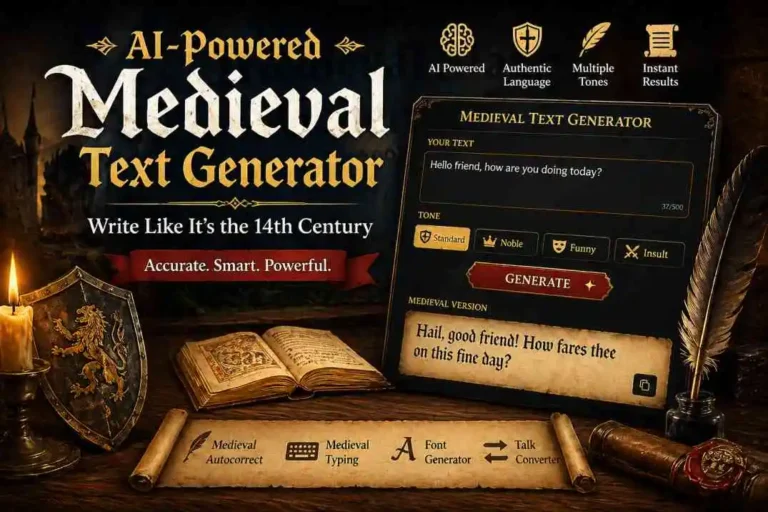
- Medieval Text Generator
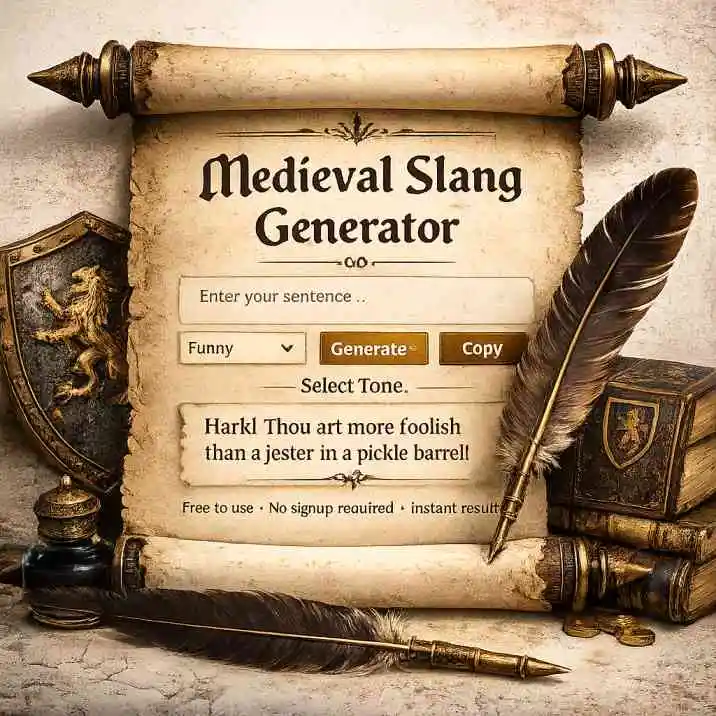
- Medieval Slang Generator
- How to Speak Medieval English
- Medieval Vocabulary Guide
Common Mistakes to Avoid
❌ Overusing “thou” incorrectly
❌ Mixing modern slang
❌ Ignoring grammar rules
❌ Using random generators
Conclusion
An english to medieval english translator is a powerful tool for transforming modern language into historical-style writing. Understanding how it works helps you produce better and more authentic results.
Final Verdict
If you want realistic output, combine a medieval text translator with basic grammar knowledge. This ensures your translations feel natural and engaging.
FAQs
How do I translate to medieval English?
Use a translator tool or apply grammar rules like thou, thee, and -eth verbs.
Is medieval English accurate?
Most tools provide simplified versions for readability.
Can I translate medieval English to modern English?
Yes, using a medieval english to modern english translator.
What is a medieval dialect translator?
It applies regional variations of medieval language style.