Medieval Words and Phrases: A Vocabulary Glossary (2026)
Looking for a complete list of medieval words and phrases? This guide covers common medieval terms, slang, titles, and everyday expressions.
Whether you’re writing, roleplaying, or learning history, this medieval vocabulary guide gives you everything in one place.
What Are Medieval Words and Phrases?
Medieval English words come from the Middle Ages (5th–15th century) and reflect how people spoke, wrote, and communicated.
These include:
- Everyday vocabulary
- Social titles
- Slang expressions
- Formal language
This is often referred to as medieval lingo, medieval jargon, or medieval terminology.
A–Z Medieval Vocabulary List (Core Terms)
Common Medieval Words
| Word | Meaning |
|---|---|
| Thou | You |
| Thee | You (object form) |
| Thy | Your |
| Hark | Listen |
| Aye | Yes |
| Nay | No |
| Anon | Soon |
| Prithee | Please |
| Verily | Truly |
Medieval Slang Words and Expressions
Some medieval slang words were used in daily life:
- Knave → dishonest man
- Wench → young woman
- Rogue → troublemaker
- Churl → rude person
These are essential for understanding medieval slang and medieval talk.
Medieval Titles and Social Classes
Understanding roles is key to medieval language.
What Is a Noble in Medieval Times?
A noble in medieval times was a person of high rank, often owning land and serving the king.
Nobility Medieval Times Includes:
- King / Queen
- Duke
- Earl
- Baron
Yeoman in Medieval Times
A yeoman in medieval times was a free man who owned land and was below the nobility but above peasants.
Medieval Terms by Category
🏰 Royal & Noble Terms
- Sovereign
- Crown
- Court
- Realm
⚔️ Military Terms
- Knight
- Squire
- Shield
- Blade
📜 Daily Life Terms
- Hearth
- Bread
- Ale
- Market
Medieval English Dictionary (Expanded)
This section works as a medieval english dictionary:
- Beseech → to beg
- Dost → do
- Hath → has
- Wilt → will
Medieval Phrases and Their Meanings
Common Medieval Phrases
- “Godspeed” → good luck
- “Fare thee well” → goodbye
- “By my troth” → truly
- “At thy service” → I serve you
Medieval Words in Sentences
Examples help understanding:
- “Thou art brave”
- “I beseech thee”
- “Hark! The bell tolls”
These examples improve your medieval sentence understanding.
Medieval Writing Style
To write like medieval times:
✔ Use formal tone
✔ Add poetic words
✔ Avoid modern slang
✔ Use longer sentence structures
Best Way to Learn Medieval Vocabulary
- Learn 20–30 words daily
- Practice sentence building
- Use our translation tools
- Read medieval-style text
Internal Guides You Should Explore
To apply this vocabulary:
Conclusion
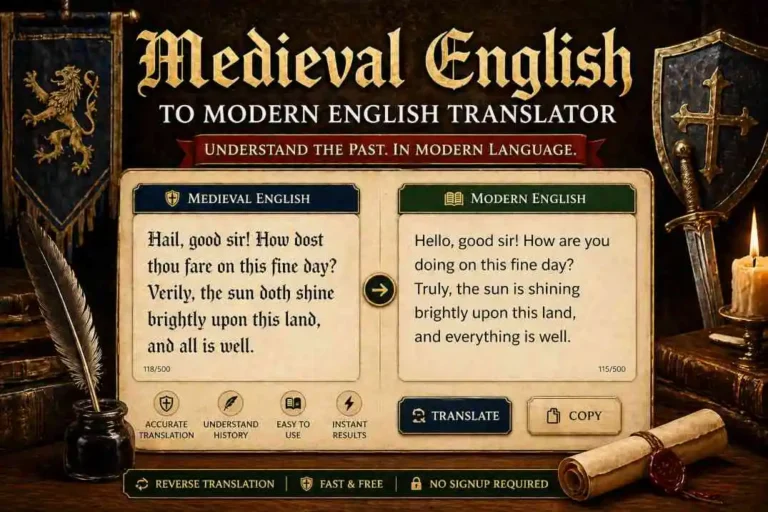
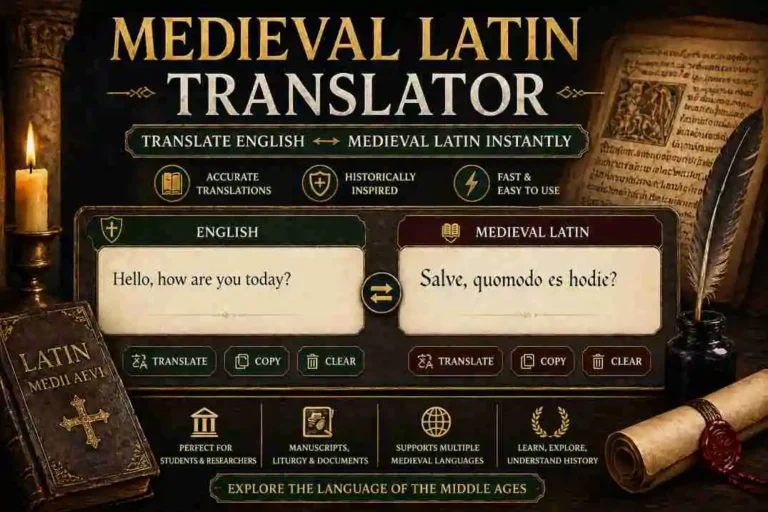
This glossary covers common medieval vocabulary, titles, slang, and phrases you’re likely to run into in historical fiction, roleplaying, or casual reading. Pair it with our Medieval Translator Tool to apply these words directly, or our How to Speak Medieval English guide for more on putting them into sentences.
FAQs
What are medieval words?
They are words used during the Middle Ages, often different from modern English.
What is medieval vocabulary?
It includes all words, phrases, and terminology used in medieval times.
What is a noble in medieval times?
A noble was a high-ranking individual with land and power.
What is a yeoman?
A yeoman was a free landowner below nobility.
About the author: Adeel Shahzad is the creator of Norse Translator Hub, an independent project making Old Norse language and runes easier to explore. He builds the site’s dictionary-based translation tools and writes its reference guides, drawing on public-domain sources like Cleasby & Vigfusson’s Icelandic-English Dictionary. Read more on the About page.