Norse Mythology: Gods, Creation Story & Religion Explained
Ancient Norse mythology blended gods, fate, cosmic destruction, and Viking spiritual beliefs into one powerful tradition.
Norse mythology is one of the richest mythological systems in human history. Rooted in Viking-age Scandinavia, it explains the origins of the world, the Norse gods and goddesses, Ragnarok, Valhalla, magical realms, and the spiritual beliefs of ancient Norse society. This guide explores Norse mythology meaning, its creation story, major deities, myths, symbols, and religious foundations in clear modern language.
Quick Answer
Norse mythology is the collection of myths, gods, legends, and religious beliefs practiced by ancient Scandinavian peoples before Christianity. It includes famous figures like Odin, Thor, Loki, and Freya, along with stories about creation, Ragnarok, Valhalla, Yggdrasil, and the Nine Realms that shaped Viking culture and Norse religion.
What Is Norse Mythology?
Norse mythology refers to the mythological and religious traditions of the Norse people from Scandinavia, especially during the Viking Age.
These myths helped explain:
- Creation of the universe
- Nature of the gods
- Fate and destiny
- Death and the afterlife
- Cosmic balance
- Human struggle
Unlike some mythological systems, Norse myths often focused on survival, sacrifice, inevitability, and honor.
Norse Mythology Meaning
The word “mythology” here refers to interconnected stories, spiritual beliefs, rituals, and oral traditions passed down across generations of Norse society.
Norse mythology was deeply tied to:
- Viking culture
- Scandinavian religion
- Old Norse language
- Rune traditions
- Heroic storytelling
Origins of Norse Mythology
The origins of Norse mythology developed gradually among Germanic tribes in Northern Europe long before the Viking Age began.
Most surviving Norse myths were preserved in:
- The Poetic Edda
- The Prose Edda
- Icelandic sagas
- Skaldic poetry
Norse Mythology Timeline
| Period | Development |
|---|---|
| Pre-Christian Era | Early Germanic beliefs form |
| Viking Age | Norse myths spread widely |
| 13th Century | Myths recorded in Iceland |
| Modern Era | Global revival of Norse interest |
Iceland became especially important because medieval scholars preserved stories that may otherwise have disappeared.
The Norse Creation Myth Explained
The Norse creation story begins with emptiness.
Before the world existed, there were only two realms:
| Realm | Nature |
|---|---|
| Muspelheim | Fire and heat |
| Niflheim | Ice and cold |
Between them was Ginnungagap, the primordial void.
Norse Story of Creation
When fire from Muspelheim met the frozen rivers of Niflheim, life emerged.
The first beings included:
- Ymir, the giant
- Audhumla, the cosmic cow
Later, Odin and his brothers killed Ymir and created the world using his body.
| Body Part of Ymir | Creation |
|---|---|
| Flesh | Earth |
| Blood | Oceans |
| Bones | Mountains |
| Skull | Sky |
This Norse myth creation story reflects themes of transformation and sacrifice.
The Norse Pantheon and Gods
The Norse pantheon contains gods, goddesses, giants, spirits, and supernatural beings connected to nature, warfare, wisdom, fertility, and fate.
Major Norse Gods
| Norse God | Role |
|---|---|
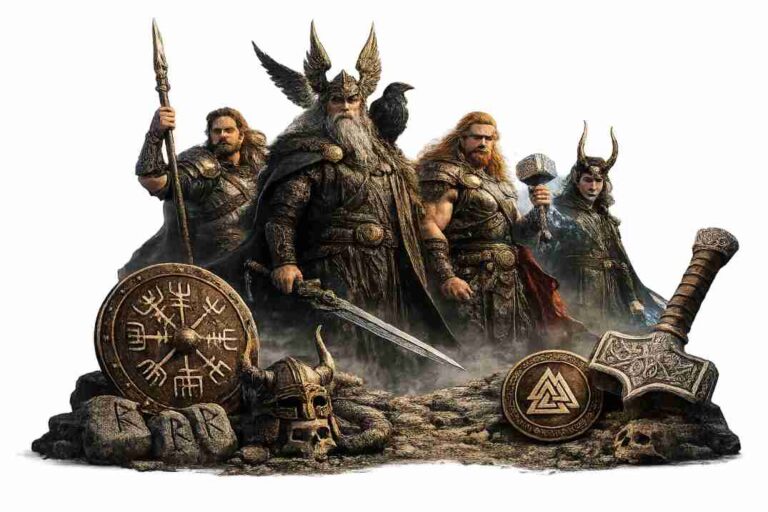
| Odin | Wisdom, war, magic |
| Thor | Thunder and protection |
| Loki | Chaos and trickery |
| Freya | Love and magic |
| Tyr | Justice and battle |
| Heimdall | Guardian of the gods |
| Frigg | Prophecy and motherhood |
| Baldr | Light and peace |
These Norse mythology gods and goddesses reflected the realities of Viking life, especially survival, storms, warfare, and exploration.
Odin, Thor, and Loki
Modern media popularized Odin, Thor, and Loki, but original Norse mythology portrayed them with far more complexity.
- Odin sacrificed for knowledge
- Thor protected both gods and humans
- Loki disrupted cosmic balance through deception and unpredictability
The Nine Realms in Norse Mythology
The Norse mythology realms were interconnected worlds connected by Yggdrasil, the cosmic world tree.
The Nine Realms
| Realm | Meaning |
|---|---|
| Asgard | Realm of the Aesir gods |
| Midgard | Human world |
| Jotunheim | Land of giants |
| Vanaheim | Home of Vanir gods |
| Alfheim | Realm of light elves |
| Svartalfheim | Dwarven realm |
| Niflheim | Realm of ice and mist |
| Muspelheim | Realm of fire |
| Helheim | Underworld realm |
What Does “Heim” Mean in Norse?
“Heim” roughly means:
- Home
- Realm
- World
- Domain
That is why many Norse realms end with “heim.”
Valhalla Meaning in Norse Mythology
Valhalla was the legendary hall ruled by Odin where fallen warriors were believed to go after death.
What Was Valhalla?
Valhalla symbolized:
- Honor in battle
- Warrior culture
- Preparation for Ragnarok
- Eternal feasting and combat
Not all dead entered Valhalla. Some were believed to enter Freya’s hall, while others went to Helheim.
Ragnarok in Norse Mythology
Ragnarok is the catastrophic end of the Norse cosmos.
It includes:
- Final battles
- Death of major gods
- Destruction of the world
- Rebirth of creation
Key Ragnarok Events
- Fimbulwinter begins
- Chaos spreads across realms
- Loki breaks free
- Fenrir devours Odin
- Thor kills Jormungandr
- The world burns
- A renewed world rises again
Ragnarok represented the Norse belief that even gods could not escape fate.
Norse Religion and Pagan Beliefs
Norse mythology was part of a living religious system practiced before Christianity spread through Scandinavia.
Norse Pagan Religion
Norse pagan beliefs included:
- Worship of multiple gods
- Ritual sacrifices
- Sacred natural sites
- Fate and destiny
- Ancestor reverence
Religion was woven directly into daily Viking life.
Is Norse Mythology Real?
Historically, Norse mythology was a real religious belief system for ancient Scandinavian societies.
Today, people usually study it as:
- Mythology
- Cultural history
- Literature
- Spiritual inspiration
Some modern groups still practice forms of Norse paganism such as Ásatrú.
Norse Symbols and Mythological Meanings
Symbols played an important role in Norse mythology and Viking identity.
Important Norse Mythology Symbols
| Symbol | Meaning |
|---|---|
| Mjölnir | Protection and strength |
| Valknut | Odin and the afterlife |
| Yggdrasil | Cosmic connection |
| Vegvisir | Guidance |
| Runes | Writing and mystical symbolism |
Historically, these symbols carried spiritual and cultural importance beyond decoration.
Norse Mythology Terms and Hidden Meanings
Several Old Norse terms still appear in mythology discussions today.
Havi Norse Meaning
“Havi” is another name for Odin and roughly translates to “High One.”
Gleipnir Norse Meaning
Gleipnir was the magical chain used to bind the wolf Fenrir during Ragnarok mythology.
Gard Meaning in Norse
“Gard” or “Garth” often means:
- Enclosure
- Protected place
- Settlement
Midgard literally means the “middle enclosure.”
Ergi and Argr Meaning in Norse
These Old Norse terms carried strong social and cultural implications tied to dishonor, masculinity, and societal expectations in Viking-age Scandinavia.
Norse Heroes and Legendary Figures
Norse mythology also includes legendary heroes beyond the gods themselves.
Famous Norse Heroes
| Hero | Known For |
|---|---|
| Sigurd | Dragon slayer |
| Beowulf | Monster hunter |
| Ragnar Lodbrok | Legendary Viking ruler |
| Brynhild | Valkyrie warrior |
These Norse legends blended history, mythology, and oral storytelling traditions.
Detailed Breakdown of Norse Mythology
Core Themes
| Theme | Meaning |
|---|---|
| Fate | Destiny cannot be avoided |
| Sacrifice | Wisdom requires loss |
| Honor | Reputation outlives death |
| Chaos vs Order | Cosmic balance |
| Rebirth | Destruction leads to renewal |
Important Mythological Beings
| Being | Role |
|---|---|
| Gods | Divine rulers |
| Giants | Forces of chaos |
| Elves | Spiritual beings |
| Dwarves | Master craftsmen |
| Valkyries | Choosers of the slain |
Norse Heaven Equivalent
Unlike Mount Olympus in Greek mythology, Norse mythology did not focus on one singular heavenly paradise.
Different afterlife destinations included:
- Valhalla
- Fólkvangr
- Helheim
Best Norse Mythology Books for Beginners
Recommended Reads
| Book | Why It’s Useful |
|---|---|
| The Poetic Edda | Primary mythological source |
| The Prose Edda | Detailed mythology explanations |
| Norse Mythology by Neil Gaiman | Beginner-friendly retelling |
| Norse Mythology for Smart People | Clear educational breakdowns |
For serious historical study, the Eddas remain the most important sources.
Pro Tips and Insider Insights
Norse Mythology Was Never Fully Unified
Different Scandinavian regions had local variations in myths, gods, rituals, and storytelling traditions.
Loki Was More Complex Than Modern Adaptations
Original Norse myths portray Loki as both ally and destroyer, not simply a villain.
Vikings Did Not Wear Horned Helmets
That image came much later from artistic interpretations and opera costumes rather than historical evidence.
Ravens and Crows Had Deep Symbolism
Crow meaning in Norse mythology was strongly tied to Odin, wisdom, battlefields, memory, and spiritual observation through Huginn and Muninn.
FAQs
What is Norse mythology?
Norse mythology is the collection of myths, gods, legends, and religious traditions practiced by ancient Scandinavian peoples before Christianity. It includes stories about Odin, Thor, Loki, Ragnarok, Valhalla, and the Nine Realms.
Is Norse mythology a real religion?
Historically, yes. Norse mythology formed the foundation of ancient Scandinavian pagan religion. Today, some people still practice modern forms of Norse paganism such as Ásatrú and Heathenry inspired by Old Norse traditions.
Who are the main gods in Norse mythology?
The major Norse gods include Odin, Thor, Loki, Freya, Tyr, Frigg, Heimdall, and Baldr. Each deity represented different aspects of life including wisdom, war, thunder, fertility, prophecy, and protection.
What is Ragnarok in Norse mythology?
Ragnarok is the apocalyptic final battle in Norse mythology where gods, giants, and monsters destroy the existing cosmos before a renewed world emerges. It represents fate, destruction, and rebirth.
What does Valhalla mean in Norse mythology?
Valhalla was Odin’s hall where fallen warriors were believed to go after death. It symbolized honor, bravery, and preparation for Ragnarok within Viking warrior culture.
What are the Nine Realms in Norse mythology?
The Nine Realms are interconnected worlds linked through Yggdrasil. They include Asgard, Midgard, Jotunheim, Vanaheim, Muspelheim, Niflheim, Helheim, Alfheim, and Svartalfheim.
Are Norse myths connected to Vikings?
Yes. Viking societies inherited and practiced Norse mythology as part of their cultural and religious identity during the Viking Age across Scandinavia.
Conclusion
Norse mythology remains one of the most influential mythological traditions in the world because it combines powerful storytelling with deep cultural symbolism. Its gods, creation myths, heroic sagas, and spiritual beliefs reveal how ancient Scandinavian societies understood fate, survival, honor, and the universe itself.
Final Verdict
Understanding Norse mythology offers far more than entertainment or fantasy references. It provides insight into Viking culture, Old Norse language, Scandinavian religion, and one of history’s most enduring mythological systems. Whether someone studies mythology academically or explores it through modern culture, the Norse tradition continues to shape storytelling, symbolism, and identity worldwide.
Important Guides
If you want to explore Norse mythology, Viking culture, and Old Norse symbolism more deeply, these related guides expand on key topics covered in this article:
Old Norse Language Guide: Words, Origins & Meanings
Norse Meaning: The Complete Guide to Norse Words, Symbols & Mythology
Norse Gods Names and Meanings: Complete Deity Guide