Old Norse Language: Words, Meanings & How It Works
The Old Norse language shaped Viking culture, Scandinavian history, mythology, and many modern English words.
Old Norse was the language spoken across Viking-age Scandinavia and remains one of the most influential ancient Germanic languages in history. It preserved Norse mythology, Viking sagas, rune inscriptions, and the cultural identity of medieval Northern Europe. This guide explains what Old Norse is, how the Norse language worked, important Norse words and meanings, linguistic origins, and the lasting influence of Old Norse on modern languages.
Quick Answer
Old Norse was the North Germanic language spoken by Vikings and medieval Scandinavians between roughly the 8th and 14th centuries. It was used across Norway, Iceland, Denmark, and Sweden and became the foundation for modern Icelandic, Norwegian, Danish, and Swedish while also influencing many English words.
What Is Old Norse?
Old Norse was the primary language of Viking-age Scandinavia and one of the most important medieval Germanic languages.
It was spoken across:
- Norway
- Iceland
- Denmark
- Sweden
- Faroe Islands
- Viking settlements abroad
The language preserved Norse mythology, poetry, law, oral storytelling, and historical records.
What Is the Norse Language?
When people ask “what is the Norse language,” they are usually referring to Old Norse.
Old Norse was:
- A North Germanic language
- Written using runes and later Latin script
- Closely connected to Viking culture
- The language of Icelandic sagas and Eddas
Modern Scandinavian languages evolved directly from it.
Origins of the Old Norse Language
Old Norse developed from earlier Proto-Germanic and Proto-Norse linguistic traditions.
Historical Development
| Period | Language Stage |
|---|---|
| Proto-Germanic | Early Germanic roots |
| Proto-Norse | Early Scandinavian form |
| Old Norse | Viking-age language |
| Modern Nordic Languages | Icelandic, Swedish, Danish, Norwegian |
The Viking Age helped spread Old Norse across Europe through trade, exploration, and settlement.
Old Icelandic and the Preservation of Norse
Old Icelandic is often considered the closest preserved form of Old Norse.
Why Iceland Matters
Iceland preserved:
- Viking sagas
- Mythological poetry
- Historical texts
- Medieval Norse grammar
Many surviving Norse mythology sources, including the Poetic Edda and Prose Edda, were written in Old Icelandic.
From what we’ve seen linguistically, modern Icelandic still retains many Old Norse grammatical features.
How the Old Norse Language Worked
Old Norse grammar was more complex than modern English.
Core Features of Old Norse
| Feature | Description |
|---|---|
| Cases | Words changed by grammatical role |
| Gender | Masculine, feminine, neuter |
| Strong verbs | Verb forms changed significantly |
| Compound words | Multiple meanings combined |
| Flexible sentence structure | Word endings carried meaning |
This structure allowed Viking-age poetry and sagas to become highly expressive and symbolic.
Norse Words and Meanings
Many Norse words still survive in modern English and Scandinavian languages.
Common Old Norse Words
| Old Norse Word | Meaning |
|---|---|
| Vikingr | Raider or seafarer |
| Heim | Home or world |
| Gard | Enclosure or settlement |
| Havi | High One |
| Is | Ice |
| Skald | Poet |
| Jarl | Noble leader |
What Does the Old Norse Word Vikingr Mean?
The word “Vikingr” referred to:
- A seafaring raider
- Explorer
- Pirate-like expedition participant
Originally, “going Viking” described an activity rather than an ethnicity.
What Does Heim Mean in Norse?
“Heim” means:
- Home
- Realm
- World
- Domain
That is why Norse mythology realms often end in:
- Asgard
- Midgard
- Helheim
Gard Meaning Norse Tradition
“Gard” or “Garth” referred to:
- Enclosed settlements
- Fortified spaces
- Protected communities
Midgard literally translates to “middle enclosure.”
Old Norse Words Connected to Mythology
Many Norse mythology names and concepts come directly from Old Norse vocabulary.
Havi Norse Meaning
“Havi” was another title for Odin and roughly means:
- High One
- The High
The name reflected Odin’s role as chief deity and wisdom figure.
Old Norse Word for Ice
The Old Norse word “ís” meant ice and influenced several modern Scandinavian words tied to cold environments.
Ergi Meaning Norse
“Ergi” was a socially powerful Old Norse concept linked to dishonor and accusations of weakness or unmanliness in Viking society.
Argr Norse Meaning
“Argr” described someone considered dishonorable or socially shameful according to Norse cultural standards.
These terms reveal how strongly Viking-age society valued reputation and masculinity.
Norse Slang Meaning and Everyday Language
Although “slang” works differently in ancient languages, Old Norse included informal expressions and culturally specific terminology.
Everyday Norse Vocabulary
| Word | Meaning |
|---|---|
| Skol | Toast or cheers |
| Drengr | Brave warrior |
| Husbondi | Master of a household |
| Knifr | Knife |
Some of these words later influenced English vocabulary directly.
Old Norse Influence on English
Viking settlement in England heavily shaped the English language.
English Words from Old Norse
| English Word | Old Norse Origin |
|---|---|
| Sky | Ský |
| Window | Vindauga |
| Knife | Knífr |
| Law | Lag |
| Husband | Húsbóndi |
From what we’ve seen historically, Old Norse influenced English more deeply than most people realize.
Old Norse Writing Systems
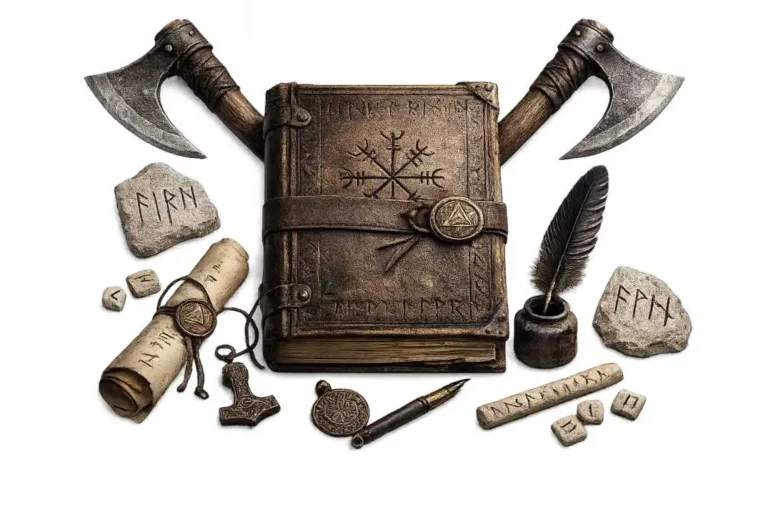
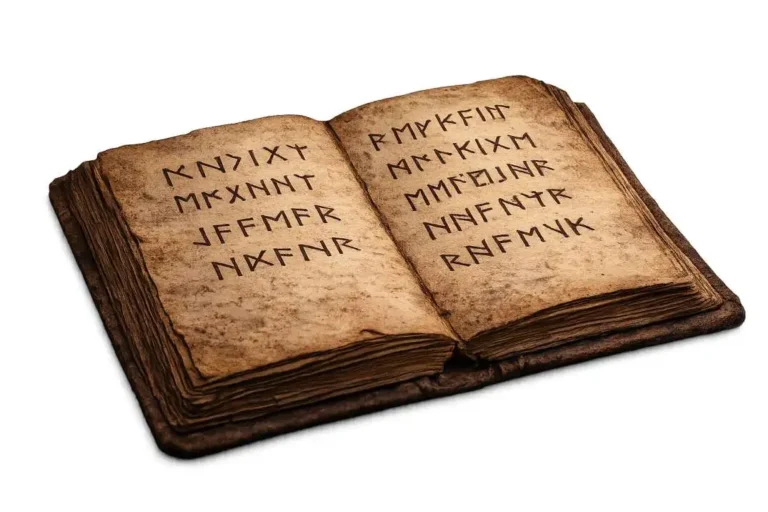
Early Norse writing used runic alphabets before Latin script became widespread.
Main Rune Systems
| Rune System | Time Period |
|---|---|
| Elder Futhark | Early Germanic period |
| Younger Futhark | Viking Age |
| Medieval Runes | Later Scandinavian use |
Runes were used for:
- Memorial stones
- Ownership markings
- Communication
- Religious carvings
Detailed Breakdown of Old Norse Language
Language Family
| Language Group | Classification |
|---|---|
| Indo-European | Major language family |
| Germanic | Subgroup |
| North Germanic | Scandinavian branch |
| Old Norse | Viking-age language |
Main Dialects
| Dialect | Region |
|---|---|
| Old West Norse | Norway and Iceland |
| Old East Norse | Denmark and Sweden |
Cultural Importance
Old Norse preserved:
- Viking history
- Norse mythology
- Scandinavian law
- Heroic sagas
- Poetic traditions
Best Resources for Learning Old Norse
Recommended Starting Points
| Resource | Why It Helps |
|---|---|
| Poetic Edda | Mythology and poetry |
| Prose Edda | Language and myths |
| Viking sagas | Realistic Old Norse usage |
| Rune studies | Writing systems |
Modern learners often begin with mythology before exploring grammar and historical linguistics.
Pro Tips and Insider Insights
Old Norse Was Never Completely Uniform
Different Scandinavian regions developed variations in pronunciation, vocabulary, and grammar across centuries.
Iceland Preserved the Language Best
Modern Icelandic remains surprisingly close to medieval Old Norse compared to other Nordic languages.
Vikingr Did Not Mean “Viking People”
Historically, “Vikingr” described participation in raiding or seafaring activities rather than an ethnic identity.
Norse Mythology Helped Preserve the Language
Without Icelandic mythological manuscripts, much of Old Norse literature and vocabulary may have disappeared entirely.
FAQs
What is Old Norse?
Old Norse was the North Germanic language spoken across Viking-age Scandinavia between the 8th and 14th centuries. It became the foundation for several modern Scandinavian languages and preserved Norse mythology and Viking history.
Is Old Norse the same as Icelandic?
Not exactly. Modern Icelandic evolved from Old Norse and remains closely related, but Old Norse was the earlier medieval language spoken throughout Scandinavia during the Viking Age.
What does Vikingr mean in Old Norse?
“Vikingr” referred to a person participating in seafaring expeditions, raids, or exploration. It originally described an activity rather than a specific ethnic group.
What does Heim mean in Norse?
“Heim” means home, world, or realm in Old Norse. The word appears in many Norse mythology place names such as Helheim and Niflheim.
Did Old Norse influence English?
Yes. Viking settlements introduced many Old Norse words into English, including sky, window, knife, husband, and law. The influence remains visible in modern vocabulary today.
What writing system did Old Norse use?
Old Norse initially used runic alphabets such as Elder Futhark and Younger Futhark before transitioning toward Latin script in medieval Scandinavia.
Is Old Norse still spoken today?
Old Norse itself is no longer spoken as a living language, but modern Icelandic preserves many of its grammatical and linguistic features more closely than other Scandinavian languages.
Conclusion
The Old Norse language remains one of the most important cultural foundations of Viking history, Scandinavian mythology, and medieval Northern Europe. Its influence survives not only through Icelandic literature and Norse myths but also in modern languages, names, symbols, and everyday English vocabulary.
Final Verdict
Understanding Old Norse helps connect mythology, language, Viking culture, and Scandinavian history into one coherent tradition. Whether someone studies Norse mythology, explores Viking ancestry, researches runes, or simply wants to understand Norse words and meanings, Old Norse provides the linguistic foundation behind nearly every part of the Norse world.
Important Guides
If you want to explore Viking mythology, Norse symbols, and Scandinavian culture more deeply, these related guides expand on topics covered in this article: