How to Speak Medieval English: A Practical Guide for Beginners (2026)
Want to learn how to speak medieval English like a knight, noble, or bard? This practical guide will teach you how to transform modern sentences into authentic medieval speech using real grammar patterns, vocabulary, and tone.
Whether you’re writing, roleplaying, or just having fun, mastering medieval talk is easier than you think.
What Is Medieval English?
Before learning how to speak in medieval English, you need to understand what it actually is.
Medieval English is a mix of:
- Middle English (Chaucer era)
- Early Modern English (Shakespeare style)
- Popular “medieval speak” used in games and films
Most tools today use a simplified, recognizable version of medieval times language.
How to Speak Medieval English (Step-by-Step)
1. Replace “You” With Thou / Thee
This is the biggest change in medieval speech:
| Modern | Medieval |
|---|---|
| You are | Thou art |
| I see you | I see thee |
| Your sword | Thy sword |
2. Change Verb Endings
To sound authentic:
- He knows → He knoweth
- She has → She hath
- You do → Thou dost
This is what makes your medieval talking sound real.
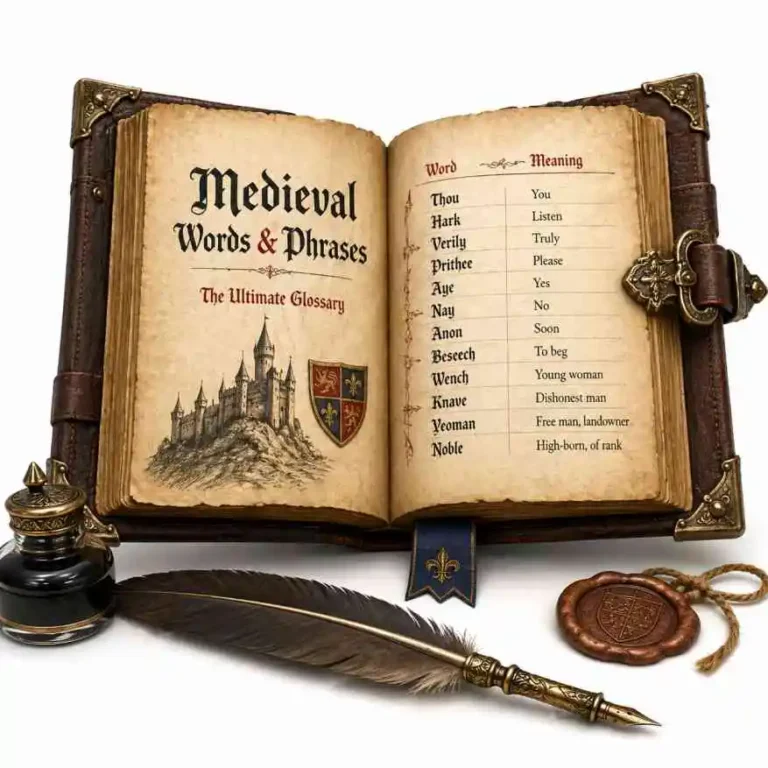
3. Use Medieval Vocabulary
Replace common words:
- Hello → Hail
- Please → Prithee
- Yes → Aye
- No → Nay
- Soon → Anon
4. Add Style Words
To improve medieval talk:
- Verily
- Forsooth
- Hark
- Behold
Example:
“Hello” → “Hail, good traveler!”
Medieval English Sentence Examples
Here are real examples to help you learn:
| Modern Sentence | Medieval Sentence |
|---|---|
| I love you | I cherish thee |
| Thank you | I thank thee |
| You’re welcome | Thou art most welcome |
| I need help | I dost require thy aid |
These examples help you build your own medieval sentence easily.
How to Say “You’re Welcome” in Medieval Times
Common ways:
- Thou art most welcome
- ’Twas mine honour
- Think nothing of it, good soul
This answers a very common query:
how to say you’re welcome in medieval times
How to Talk Medieval Like a Pro
If you want to master how to talk medieval, follow this formula:
Structure:
[Intro word] + [Thou grammar] + [Verb ending]
Example:
“You are brave”
→ “Verily, thou art most valiant”
Medieval Writing Style (Important Rules)
To improve medieval times writing:
✔ Use longer sentences
✔ Add poetic tone
✔ Avoid modern slang
✔ Use formal structure
Medieval vs Modern English
| Feature | Modern English | Medieval English |
|---|---|---|
| Pronouns | You | Thou / Thee |
| Verbs | has, does | hath, doth |
| Tone | Casual | Formal |
Best Way to Practice Medieval Speech
To improve quickly:
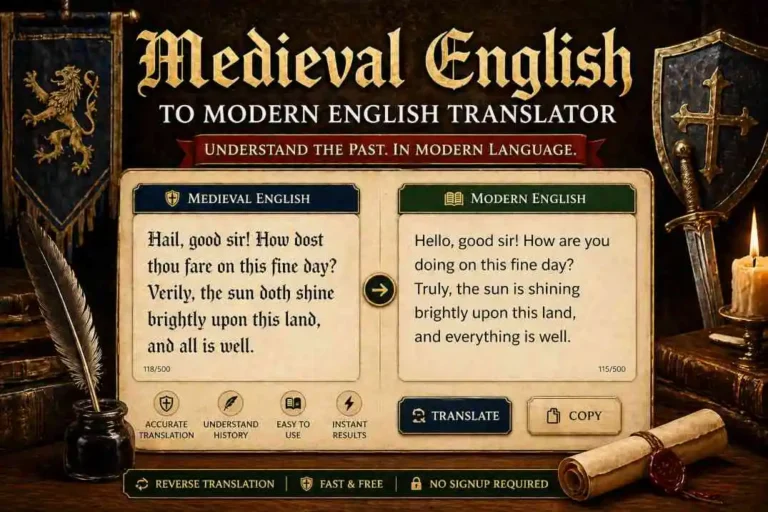
- Use a medieval translator tool
- Rewrite your own sentences
- Practice daily phrases
- Read medieval-style content
Common Mistakes Beginners Make
❌ Using “thou” incorrectly
❌ Ignoring verb endings
❌ Mixing modern slang
❌ Overusing fancy words
Final Tips for Learning Medieval English Fast
- Start simple
- Learn 20–30 key words
- Practice daily
- Use tools for accuracy
FAQs
How do you speak medieval English?
Use thou/thee grammar, add -eth verbs, and replace modern words with medieval vocabulary.
What is medieval speech?
Medieval speech is an older form of English with unique grammar, tone, and vocabulary.
Is medieval English the same as Old English?
No, Old English is much older and not easily understood today.
Can I learn medieval English easily?
Yes, by practicing grammar patterns and using simple word replacements.
Conclusion
Learning how to speak medieval English is not difficult once you understand the patterns. By combining grammar, vocabulary, and tone, you can create authentic medieval-style speech quickly.
Final Verdict
If you want realistic results, combine learning with a medieval translator tool. This ensures your medieval talk sounds accurate, natural, and engaging.