Modern to Medieval Translator
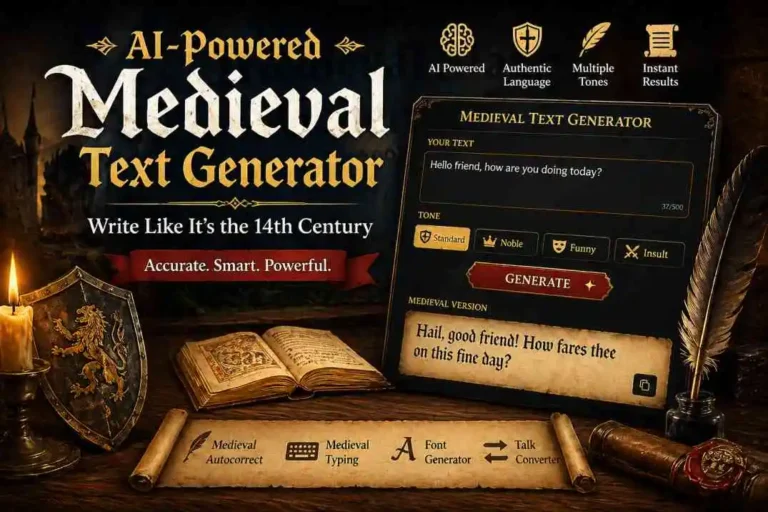
Instantly convert modern English into medieval language with tone-based translation and live typing.
Modern to Medieval Translator: Turn Your Text Into Old English Instantly (2026)
Want to sound like a knight, a peasant, or a medieval storyteller? A modern to medieval translator helps you instantly convert modern English into historical-style language.
Whether you’re writing fantasy content, roleplaying, or just having fun, these tools make medieval talking translation fast, accurate, and engaging.
What Is a Modern to Medieval Translator?
A modern english to medieval english translator converts everyday language into a medieval-style version of English.
People also search for this kind of tool as a medieval speak translator, medieval talk translator, or medieval speech translator. Whatever it’s called, the idea is the same: swap a small set of everyday English words for old-fashioned equivalents and add a tone-setting opening phrase.
How to Translate Modern English to Medieval English
To translate modern english to medieval english, tools use three key systems:
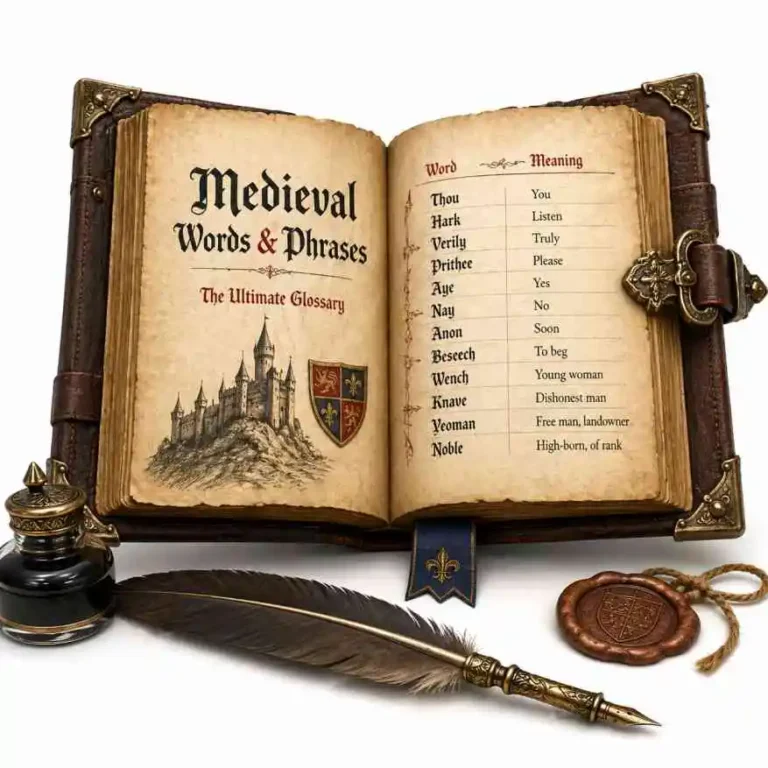
1. Word Conversion
Modern → Medieval:
- You → Thou
- Your → Thy
- Friend → Companion
2. Grammar Adjustment
- Has → Hath
- Have → Hast
- Are → Art
3. Style Engine (Advanced)
Four tone options are available, and each one adds a matching opening phrase to the translated text:
- Knight — opens with “My lord,”
- Peasant — opens with “Aye,”
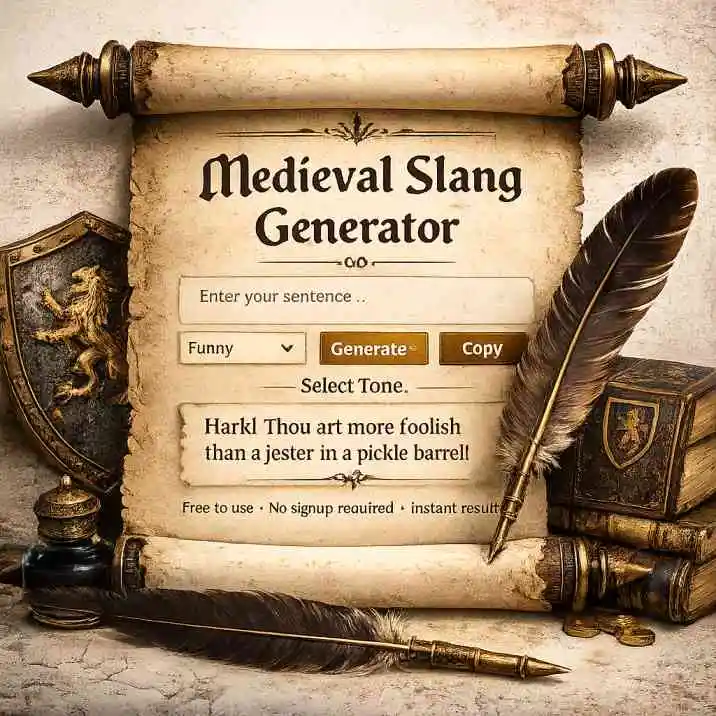
- Funny — opens with “Hark!”
The word conversions themselves stay identical across every tone — only the opening phrase changes.
What This Tool Actually Does
| Feature | Included |
|---|---|
| Word-for-word conversion of 13 common words | ✔ |
| Live output as you type | ✔ |
| 4 tone-based opening phrases | ✔ |
| Full grammar restructuring | ❌ |
| AI or context-aware translation | ❌ |
Live Translation as You Type
This tool updates the output box as soon as you stop typing — there’s no “Translate” button to click. It’s often described as “medieval autocorrect,” but that’s not quite accurate: it doesn’t rewrite the words in your own input box, it just keeps the separate output box in sync with what you’ve typed.
Medieval Talking Styles Explained
Knight Speaking Style
Formal and noble:
“Thou art most honorable, my lord.”
Peasant Style
Simple and rustic:
“Aye, I be working the fields.”
Medieval Slang Translator
Adds humor and personality to text.
Common Use Cases
People use a modern to medieval translator for:
- Gaming usernames
- Fantasy writing
- Social media content
- Roleplaying
- Memes
Medieval Writing Translator vs Speech Translator
| Type | Purpose |
|---|---|
| Writing translator | Formal text |
| Speech translator | Conversational tone |
| Slang translator | Humor |
Important Note on Accuracy
Medieval translators:
✔ Are stylistic
✔ Not 100% historically accurate
✔ Designed for readability and fun
Internal Tools You Should Use
To improve results:
- Medieval Text Generator
- English to Medieval Translator
- Medieval Slang Generator
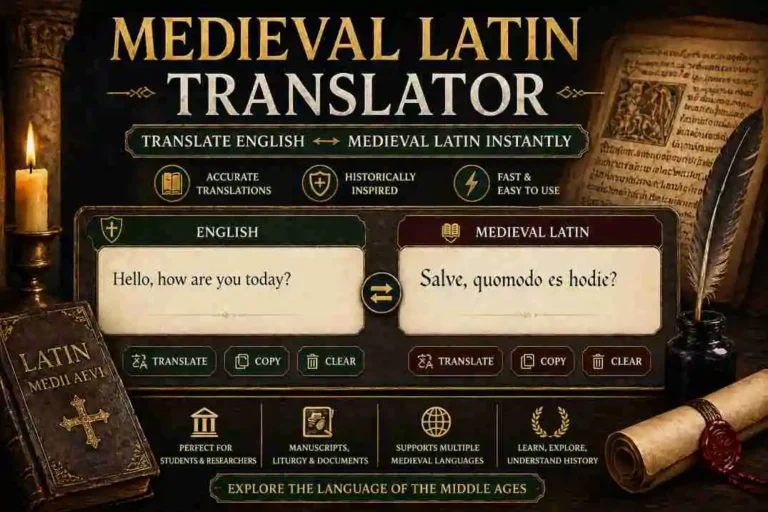
- Medieval Latin Translator
Common Mistakes to Avoid
❌ Overusing “thou” incorrectly
❌ Mixing modern slang
❌ Ignoring grammar structure
❌ Using weak tools
Conclusion
A modern to medieval translator is a quick way to give modern text a historical flavor for fantasy writing, roleplay, or social posts. This tool swaps a small set of everyday words for their old-fashioned equivalents and adds a tone-setting opening phrase — it’s a stylistic effect, not a historical translation, so treat the output as fun rather than authoritative.
FAQs
What is a modern to medieval translator?
A tool that converts modern English into medieval-style language.
How accurate are medieval translators?
They are stylistic, not fully historical.
What is medieval autocorrect?
On this tool, it means the output box updates automatically as you type — it doesn’t rewrite the text in your own input box.
Can I choose different medieval styles?
Yes — this tool offers Standard, Knight, Peasant, and Funny tone options, each adding a different opening phrase to the translated text.
Modern to Medieval Translator (Instant Tool 2026)
Convert modern English into medieval-style text instantly, with four tone options (Standard, Knight, Peasant, Funny) and live output as you type.
Price Currency: USD
Operating System: All (Web-based)
Application Category: UtilitiesApplication